
How I Helped a TV Ghost-Hunting Crew Find a Better Ghost
The story of how a historian got a call from a paranormal show—and gave a 19th-century villain his television debut.

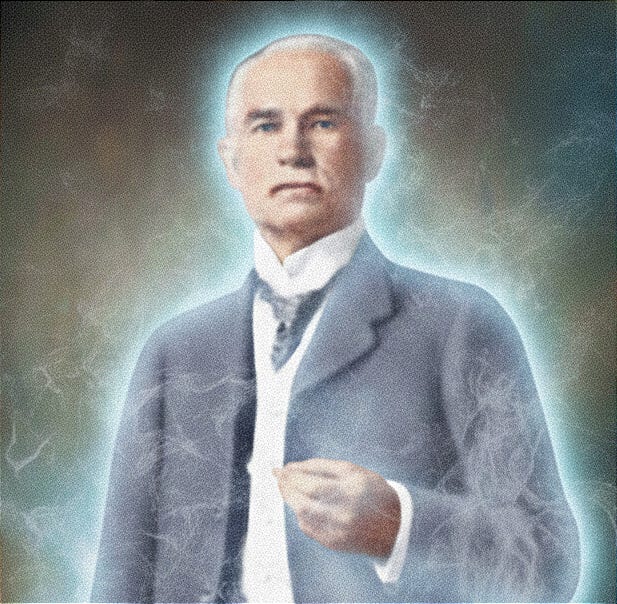
In the summer of 2021, I received an email from a man named Brian Peterson. He was the show runner for an upcoming paranormal series on the Travel Channel, and he had a problem.
His ghost wasn’t scary enough.
Thanks for reading The Dustbin Historian! Subscribe for free to receive new posts and support my work.
The Call
Brian’s show was filming in Butte, Montana—the town I’d spent half a decade researching for my biography of James A. Murray, one of the Gilded Age’s most ruthless copper kings. When the book came out, a reviewer in Montana: The Magazine of Western History wrote: “One wonders why Murray has not already been the subject of a Hollywood blockbuster.”
I didn’t have an answer then. But in 2021, Hollywood—or at least basic cable—came calling.
The production was set to feature the Clark Chateau, a gorgeous mansion built by Murray's rival, and now one of Butte's supposedly haunted landmarks. The curator had given Brian some stories about John Murray, James's grand-nephew, who died at sixteen of kidney failure in the Chateau. Nice kid. Sad story. But Brian had found my book, watched my YouTube talk, and wanted something more. After a series of emails he finally got to the point:
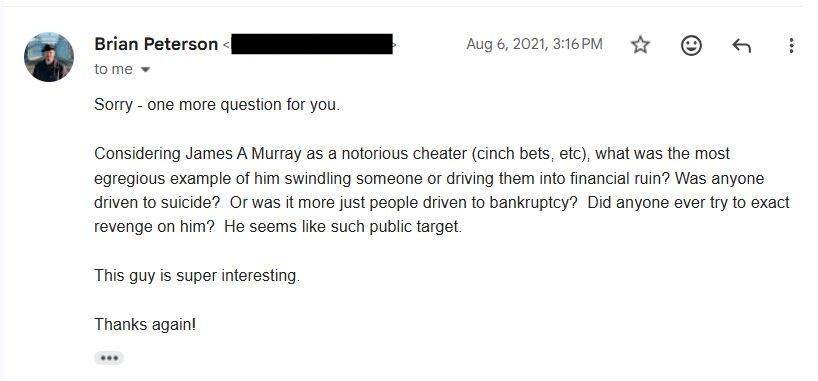
Was anyone driven to suicide?
I had exactly what he needed.
A Better Ghost
I pointed Brian to chapter three of my book, “Killing the Competition,” specifically the section called “Clipping the Blue Bird.” The story features Ferdinand Van Zandt—and it ends with a revolver in a London hotel room.
Van Zandt was everything Murray wasn’t: charming, cultured, educated at the Staten Island Academy, and married to the daughter of world-famous scientist Sir John Lubbock, 4th Baronet, 1st Baron Avebury. He’d made a fortune in commissions selling investment opportunities to wealthy Europeans, then parlayed that money and his in-laws’ bank account into the expensive business of hard-rock mining.
Van Zandt arrived in Butte and purchased the Blue Bird Mine. He built a world-class stamp mill. He employed five hundred men. Newspapers and magazines loved him.
Then he met Murray’s partner.
Pat Largey, one of Murray’s confidants and a millionaire in his own right, attended the grand opening of Van Zandt’s new mill. Murray and Largey followed up with an offer to sell him their adjoining claims, including a mine called the Little Darling, for $123,000.
Van Zandt took an option on the mines—but failed to close the deal. This may have been the first sign that Van Zandt wasn’t as flush as the press reports suggested. Murray, who had eyes and ears all over Butte picking up whispers at saloons and dance halls, surely noticed.
Two years later, Van Zandt came back with a better offer: $200,000 for Murray’s claims. Murray refused. Instead, he started developing the mines himself. Soon he discovered a productive vein that peaked inside his claim and spread under the Blue Bird.
Here’s where the apex law comes in. Under this legal doctrine, miners could follow a vein of ore wherever it led—even under someone else’s property—as long as the apex (peak) was within their own claim. When Murray’s men reached the Blue Bird’s boundary, they discovered Van Zandt had already excavated their ore.
Murray filed an injunction to halt Van Zandt’s operations. Then he filed a $2 million lawsuit.
Van Zandt was suddenly bleeding money. The injunction cut off his cash flow, but he still had to pay to pump water out of the mine. He still had to pay security to fend off scavengers stealing the timbers that lined his tunnels and shafts. The case sat on the court calendar for over a year. Elaborate three-dimensional models were prepared for trial, showing how the silver veins peaked and dipped underground. The models clearly showed Van Zandt had taken Murray’s silver.
Van Zandt pleaded for permission to work portions of his mine that didn’t intersect with Murray’s property. Denied. He had more than $3 million sunk into the Blue Bird and was on the verge of bankruptcy. He was forced to settle, taking payment primarily in notes secured by the very claim Murray was trying to take from him.
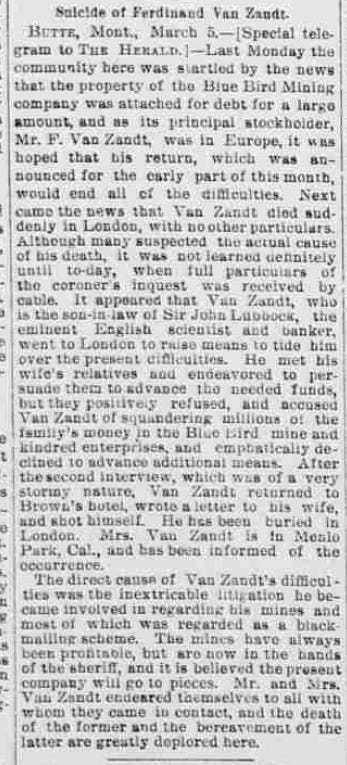
Twelve months later, the Blue Bird was in financial ruins. Van Zandt traveled to England to explain his impending bankruptcy to the friends and family who held stakes in his company. They offered no favor and no money.
After failing to inspire his investors, Ferdinand Van Zandt returned to his London hotel, pulled out his revolver, turned it to his head, and pulled the trigger.
Murray moved quickly. He made a deal with the widow and her father, Sir John Lubbock, giving them one year to reconstitute the mine’s finances. But with the Great Panic of 1893 and plummeting silver prices, she had no chance. When the year was up, Murray took control of the Blue Bird, let the mine flood, and tucked away the patent for a day when silver prices would justify reopening it.
That was the story I gave Brian Peterson.
The Episode
The show premiered on Travel Channel and Discovery+ in August 2022 as Ghosts of Devil’s Perch. The first episode was called “Blood Feud.” Brian sent me a note when it aired: “Hey there - I just wanted to thank you for the insight into James Murray last year and let you know that the episode is now airing on Discovery Plus.”
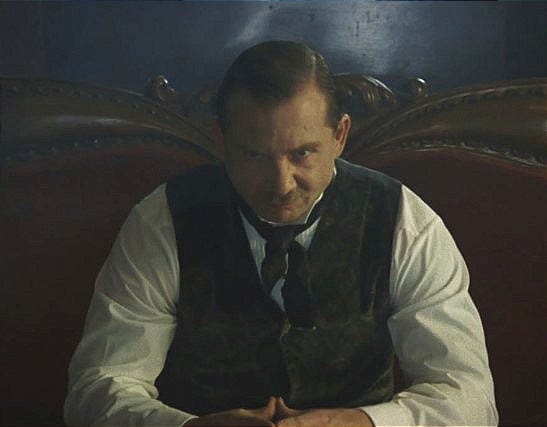
I watched it a few days later. The production team had done solid work. They’d hired an actor to play Murray—he looked nothing like him, but the scenes where he looms over paperwork were satisfying. They’d even tracked down an original Blue Bird Mine stock certificate and made it out to Ferdinand Van Zandt as an offering to the spirits.
I wrote back:
“Got a chance to watch the show. Loved seeing Murray come to life. I hadn’t realized the Travel Channel was into the paranormal. Used to read lots of that when I was in school. Butte is a great place for that theme. Lots of creepy locations with a dark past.”
“Best of luck with the series. Now do one on Murray and his ‘friend’ Maguire :)”
That last line was a joke—but also not. Murray’s relationship with John Maguire, his longtime partner and fellow Irish immigrant, is its own complicated story. I’ve got the research. I’m just waiting for the right ghost-hunting crew to call.
What the Show Got Right (and Wrong)
The production team wove the Van Zandt story effectively into their narrative. Once they had the Blue Bird Mine connection from my research, the script wrote itself: EVP readings of “Blue Bird!”, a woman appearing in blue (the widow Van Zandt), even the blue bathroom at the chateau. The paranormal “evidence” was built around the history I’d provided—not the other way around.
That’s how these shows can work. The research comes first. Then the ghost-hunting is constructed to fit the story. I gave them a villain, a victim, and a motive. They gave it the treatment: dramatic reenactments, spooky lighting, and an actor in period costume looming over documents. It’s entertainment, and I don’t begrudge them that.
Chris Fisk, the local Butte historian who appears throughout the series, delivered the context with enthusiasm. He’s good at what he does.
But here’s what the recap show got wrong.
In the YouTube episode discussing “Blood Feud,” Fisk says of the Van Zandt connection: “We don’t have these things at our fingertips, but when the wolf pack found that, I went ‘Oh my gosh, here’s your Blue Bird right here!’”
The “wolf pack” didn’t find it. I did—a decade earlier, in archives across Montana, and I published it in a book in 2017. Brian Peterson found my research and asked me directly: “Was anyone driven to suicide?” I told him about Van Zandt and pointed him to the exact chapter and page number.
I don’t blame Fisk. The show’s narrative required the investigation to feel like discovery. That’s how these programs can work. But for the historical record: the Murray-Van Zandt connection came from my book, delivered via email to the show runner before filming began.
The Credit (Or Lack Thereof)
Here’s the part where, if this were a Christmas newsletter, I’d note that Bill spent several weeks exchanging emails with the show’s production team, provided extensive historical background, connected them with Murray’s living descendants, pointed them to specific chapters and page numbers, and received... no credit whatsoever in the final episode.
No red carpets. No paparazzi.
To be fair, Brian was gracious throughout. He bought my book, watched my talk on YouTube, and genuinely seemed interested in getting the history right. The show’s format just doesn’t include “historical consultant” credits for people who answer emails. And he did thank me personally, which counts for something.
So if you watch Ghosts of Devil’s Perch and hear the team talking about “a millionaire who crushed somebody that held a lifelong grudge—and maybe into the afterlife,” that’s my guy. I found him in the archives. I wrote his biography. And then I handed him over to cable television so he could haunt a mansion in Butte.
What This Taught Me
I’ve spent years trying to explain why family history matters, why archival research matters, why we should care about people who died a century ago. And sometimes it’s hard to make that case to people who don’t share the obsession.
But a ghost-hunting show called Ghosts of Devil’s Perch? They got it immediately.
The past isn’t dead. It haunts us—sometimes literally, if you believe the mediums, and sometimes metaphorically, in the way that old grudges and buried injustices keep surfacing in unexpected places. Ferdinand Van Zandt’s story matters because it shows us what unchecked power looks like. James A. Murray’s story matters because it shows us how wealth gets made—and who pays the price.
I didn’t expect a paranormal TV show to be the vehicle for that message. But I’ll take what I can get.
Next week, I’ll tell you about the five-year journey that put me in a position to answer that email—from my first conference paper on Murray, to a peer-reviewed article, to a trade book, to an entry in the Dictionary of Irish Biography. It’s the story of how you turn an obsession into a body of work.
And it all started, like most of my stories, with a document someone filed away.
Bill Farley, PhD The Dustbin Historian DustbinHistorian.com
P.S. If you want to watch the episode yourself, “Blood Feud” is available on Discovery+.
Thanks for reading The Dustbin Historian! Subscribe for free to receive new posts and support my work.
History has so many interesting lessons for us but it is hard to get people to pay attention and even harder to get credit for the people who do the hard work. So often the best history research is hidden in expensive and little-known (or expensive) academic publications. Thanks for publishing on the web for people to read!