
Your Ancestor's Story Is Missing a Chapter
How Civil War Pension Files Can Transform Family Stories

Last week I promised we’d leave James A. Murray behind—temporarily—and talk about one of the most underused tools in the family historian’s toolkit. If you’ve been following along since Post 1, you know I’m drawn to documents that other people overlook. Old letters, auction notices, court proceedings. But of all the records I’ve ordered over the years, none have delivered more surprise per dollar than Civil War pension files.
This post is a departure from our usual storytelling. Consider it a “how to” guide—a field manual for the aspiring archive detective. I’m going to walk you through what pension files are, how to order them, and what you might actually find inside. To make the case, I’ll use three files I’ve ordered over the years: a Union drummer boy who became the most famous hack driver in the American West, a Confederate cavalryman whose pension unlocked the meaning of artifacts in a family trunk, and a Union veteran whose 112-page file reads less like a military record and more like a domestic court proceeding.
Three files. Three wars—and I don’t mean the one between North and South.
What Is a Civil War Pension File?
Most family historians know about census records, birth certificates, and ship manifests. Pension files are the records that even seasoned genealogists sometimes forget to order—and that’s a shame, because they’re often the richest single document you’ll ever find on a Civil War-era ancestor.
After the Civil War, both Union and Confederate veterans (and in some cases, their widows and dependents) could apply for government pensions based on wartime service and disability. The Union pension system was administered by the federal government through the Bureau of Pensions. Confederate pensions were handled by individual Southern states, since the federal government wasn’t in the business of compensating the other side.
What makes these files invaluable to researchers is what the government required to prove a claim. A veteran couldn’t just say, “I was at Gettysburg and my knee hurts.” He needed sworn testimony—from fellow soldiers, physicians, neighbors, and sometimes family members—all documented in writing. The result is a file that can range from a few pages to well over a hundred, packed with details about military service, medical conditions, personal relationships, financial hardship, and the everyday texture of post-war life.
In other words: it’s the stuff census records dream about when census records go to sleep at night.
How to Order One
Union pension files are held at the National Archives and Records Administration (NARA) in Washington, D.C. You can request them by submitting NATF Form 85 (for pension files) or NATF Form 86 (for military service records). Several third party websites provide retrieval services as well. As of this writing, expect the cost to run between $50 and $100. The process takes weeks to months, depending on how busy the Archives are, or if someone else has already paid for them to be digitized. Not everyone has a file so use search index on Ancestry or other third party sites first.
Confederate pension files are held by the individual states. Tennessee, Virginia, Georgia, North Carolina, and most other Southern states maintain their own archives. Some have been digitized and are available on FamilySearch or Fold3. Others require a letter, a prayer, and a stamped envelope.
What’s Inside the Envelope
The contents of a pension file depend on the veteran, the war, and—this is important—how much trouble the claim caused. A straightforward application might yield a dozen pages. A contested one can run past a hundred. Here’s what you can generally expect to find: the original pension application with personal details (age, residence, regiment, rank, enlistment and discharge dates); sworn depositions from fellow soldiers describing battles, injuries, and character; medical examination reports documenting disabilities, ailments, and the veteran’s physical condition decades after the war; correspondence between the veteran, attorneys, pension examiners, and sometimes family members; and documents related to increases, denials, appeals, and—in some cases—widows’ claims that tell entirely separate stories.
You’re not just getting a record of military service. You’re getting the closest thing the 19th century had to a social media profile—written under oath.
Now let me show you what I mean. Three files, three very different stories.
Exhibit A: The Drummer Boy Who Became Butte’s Most Famous Hack Driver
John “Fat Jack” Jones — Civil War Pension File (1897–1920)
If you’ve read my book on James A. Murray—or any of the first six posts in this series—you’ve already met Fat Jack. Six-foot-two and skinny as a fencepost, John Codman Jones earned his ironic nickname in the mining camps of Montana, where a man’s first impression was worth more than his last dollar. His original moniker was “Flap Jack,” because he was as thin as a pancake. Somewhere along the trail it got shortened. The joke only got better with age.
By the time I was deep into the Murray research, Fat Jack had become one of my favorite characters. He drove every famous visitor who rolled into Butte—William Jennings Bryan, Teddy Roosevelt, Sarah Bernhardt, Mark Twain, John L. Sullivan—perched atop his hack in a silk stovepipe hat, looking, as one reporter noted, like Abraham Lincoln if Lincoln had taken up cab driving. Murray bought him his first horse and carriage. When Jack defaulted on the loan, Murray bought him a second one. When that arrangement also went sideways, Murray forgave the debt on Christmas night at the Thornton Hotel bar.
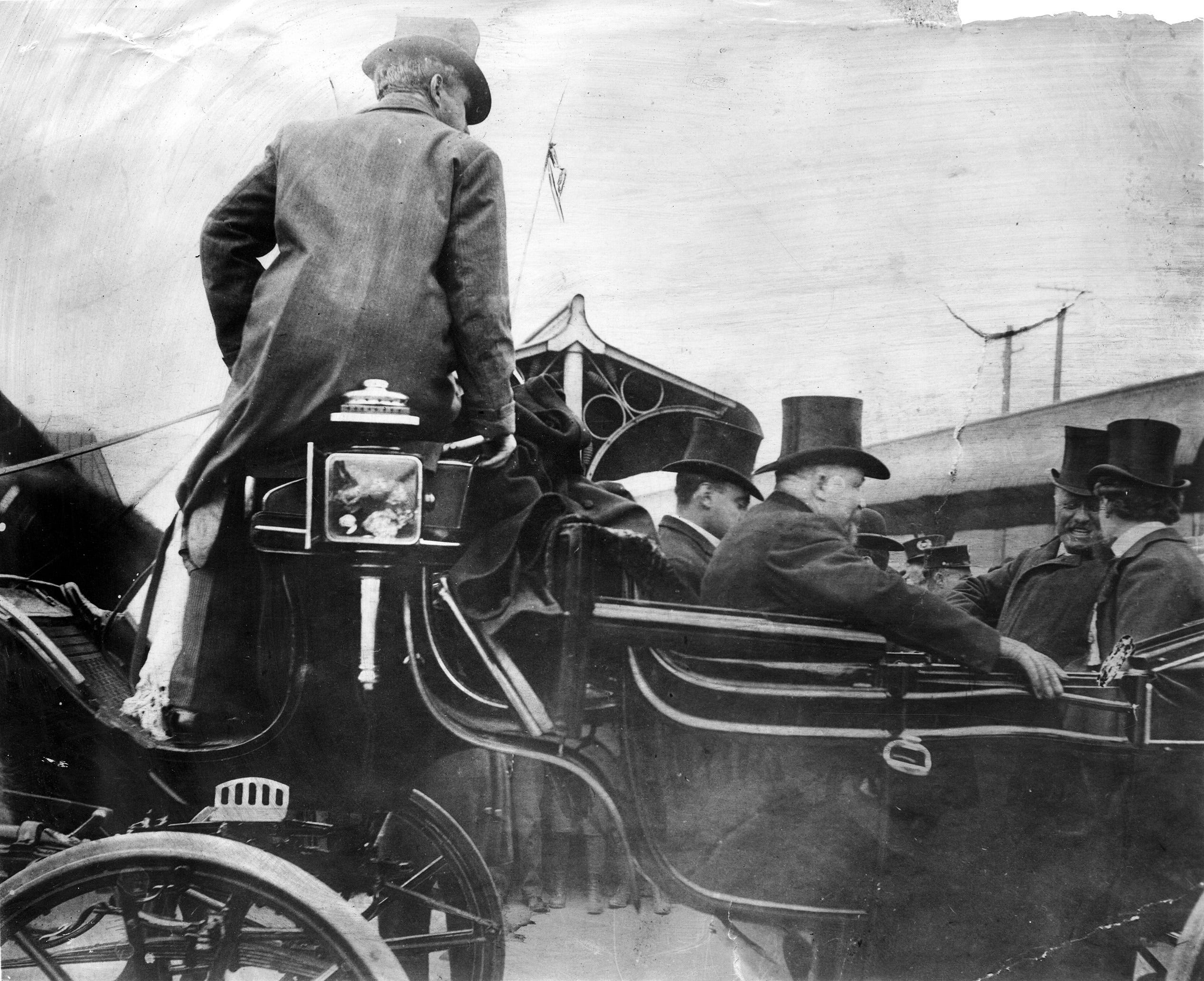
But here’s what I didn’t know until I ordered his pension file: before Fat Jack became the most beloved hack driver in the American West, he was a fifteen-year-old drummer boy in the 13th Maine Infantry.
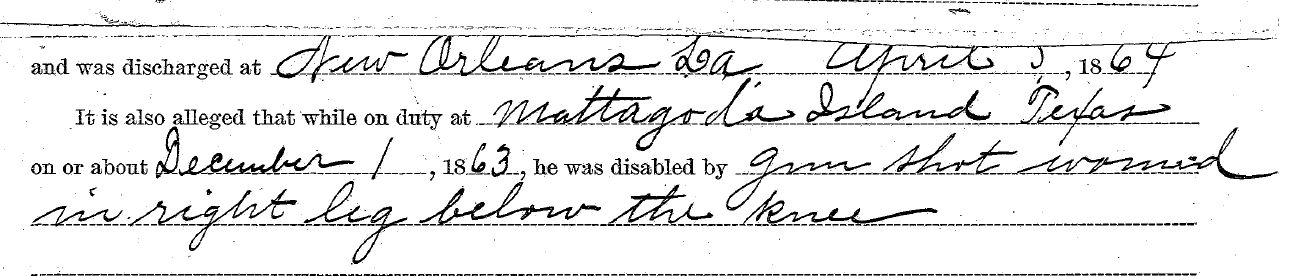
His file tells us he enlisted on November 20, 1861—barely old enough to hold a drumstick, let alone a rifle. The War Department’s records show his medical history in terse military shorthand: treated for typhoid fever as “J.C. Jones, Priv. Co. D, 13 Me.”; then malarial cachexia; then more fever. He was discharged from service, re-enlisted, and was “absent sick in quarters” for long stretches. He got off the sickbed in time to take a bullet during the Union assault on Fort Esperanza (Matagorda Island, Texas). By the time he mustered out, the boy who’d entered the war as a drummer emerged broken by disease and crippled by a gunshot wound on his right leg.
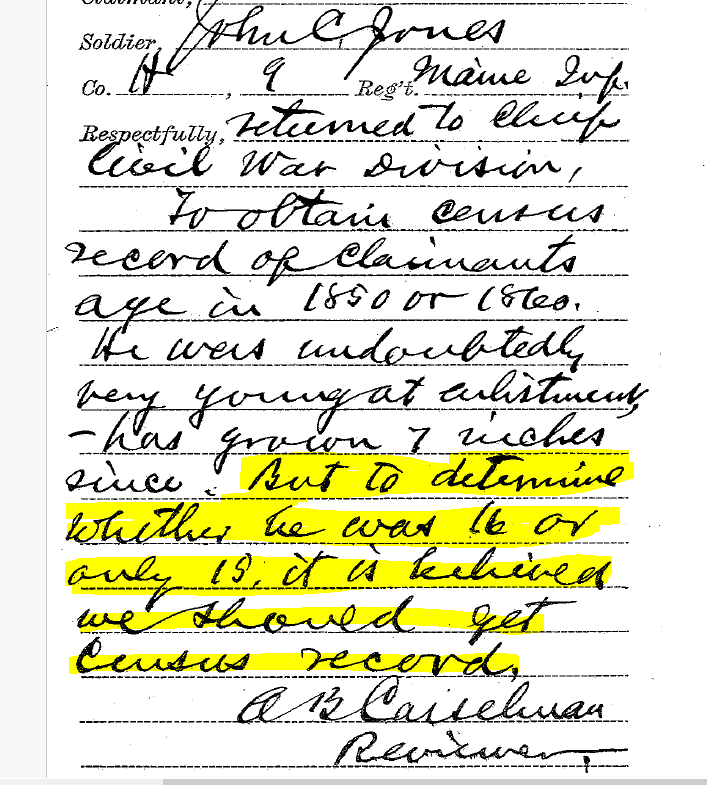
When time came to collect a pension on that service, Fat Jack had no proof of when he was born. There was no help coming from family members as both parents and al his siblings were dead. His first pension application claimed 1845 as his birth year. That would make him 16 or 17 when he enlisted and qualify him for a pension n 1906 or 1907. Sixty-two was the age for taking a pension back then. The Feds looked at the 1860 Census and figured he was born in 1847. They couldn’t find him in the 1850 Census. If they had, and checked when each census was taken, they would have determined his was born in 1846. That means Fat Jack entered service at 15 and was eligible for a pension in 1908. One of the examiners seemed to be leaning towards a later date, noting Fat Jack entered service at five foot five inches tall, and as an adult stood over six feet.
What the pension file gave me, as a researcher, was the origin story. The newspapers gave me Fat Jack the character. The file gave me John C. Jones the soldier—a teenager who went to war and came out the other side carrying scars that no amount of silk hats and faro games could hide. When Murray finally bought him a seven-passenger Packard in 1913 to replace the horse and carriage, it wasn’t just generosity. It was one old-timer looking after another who made it through hell and back.
Fat Jack spent his last year in Los Angeles, living in two rooms at W.A. Clark Jr.’s mansion. The Veteran’s Home required everyone to wear a standard military beret. Fat Jack only wore his stovepipe. He lived to age 76 - but only because he adopted 1844 as his birth year. His Montana friends gave him a headstone that memorialized this final choice. The Anaconda Standard ran a full obituary comparing him to Bret Harte’s Yuba Bill. They got the legend right. The pension file got the man.
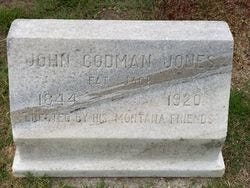
What the File Taught Me: Fat Jack’s pension file connected the colorful Butte legend to his wartime service. Without it, I had anecdotes. With it, I had the full arc—from a sixteen-year-old drummer to a dying man in a mansion, still wearing his treasured stovepipe hat.
Exhibit B: The Artifacts in the Trunk
Joel L. McPherson — Confederate Pension Application, State of Tennessee
This is the story that got me published for the first time.
My wife’s second great grandfather, Joel Lewis McPherson, left behind a small collection of artifacts that ended up in a family trunk: a photograph from the 1913 Confederate Reunion in Chattanooga, a tattered $5.00 bill from the Confederate State of Georgia, letterhead showing a paralegal business in Spring City, Tennessee, and a notice of auction to sell his belongings dated 1921. His daughter-in-law Helen thought these were the important remembrances of Joel’s life. How she knew is another story.
Traditional genealogical records told me the basics. Joel was born in Virginia in 1840, moved to Rhea County, Tennessee as a boy, headed west to Texas at 19, and joined the Confederate Army in 1861. After the war he came home, married Hanna Ladd (whose great-grandfather James Roddye signed the Tennessee State Constitution), raised 13 children, served as sheriff for three terms, and eventually practiced law. He died at 83 in 1924. His possessions were sold at auction.
A decent sketch. But it didn’t explain the $5.00 bill.
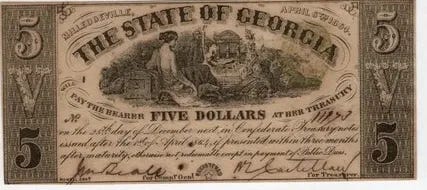
Joel’s pension application to the State of Tennessee changed everything. Unlike Union files, Confederate applications were handled at the state level, and they relied heavily on testimony from fellow veterans. Several of Joel’s brothers in arms stepped forward to describe his service. Joel Henry testified that McPherson “charged through the streets of Greenville, Tennessee with three others to take 12–16 Union prisoners—all within shooting distance of a Yankee brigade.” Henry also told how McPherson and five others in the Valley of Virginia cut off 40 Union soldiers, engaged in hand-to-hand combat, and saved the life of a 1st Lieutenant. They took 16 prisoners without losing a man. Another veteran described how Joel and two others stopped a Union flanking maneuver at the Battle of Winchester, saving an entire brigade.
V.C. Allen put it plainly: “No better soldier wore the grey than J.L. McPherson. Intelligent, quick and brave. No danger too great or duty too hard for him to respond to. He was always in front rank.”
Joel’s service ended with the Confederate forces in Kingston, Georgia on May 12, 1865—nearly four years after he first mustered in. His rank was 3rd Lieutenant.
Suddenly the artifacts in the trunk made sense. The $5.00 bill from the State of Georgia wasn’t just Confederate currency. It was a souvenir from the state where Joel’s war ended—kept for sixty years (Helen kept it for another seventy years). The photograph at the Chattanooga reunion wasn’t mere nostalgia. It was a man who’d earned the right to stand with his fellow soldiers, a man the “Rhea County Boys” remembered as one of the bravest among them.
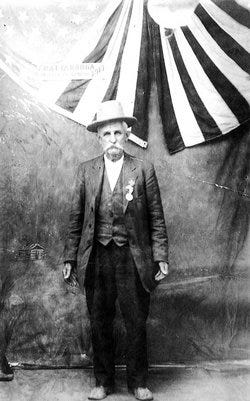
I published Joel’s story in Tennessee Ancestors in Spring 2014 under the title “Pension Application Reveals New Meaning to Artifacts.” Not exactly a headline that would make the front page of the Anaconda Standard, but it got the job done.
What the File Taught Me: Joel’s pension application didn’t just confirm his service—it transformed artifacts from curiosities into evidence. The trunk went from a box of old stuff to a curated memorial. That’s the power of pairing documents (like pension files) with physical objects.
Exhibit C: 112 Pages of Domestic Warfare
Cyrus Weaver — Civil War Pension File, National Archives
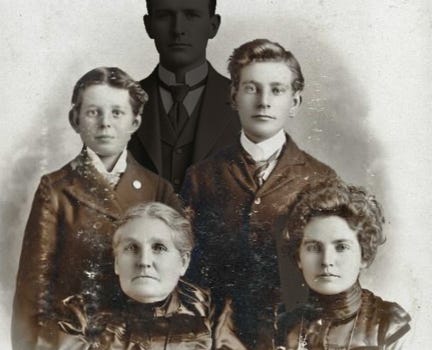
If Fat Jack’s file gave me an origin story and Joel’s gave me a revelation, Cyrus Weaver’s gave me a soap opera.
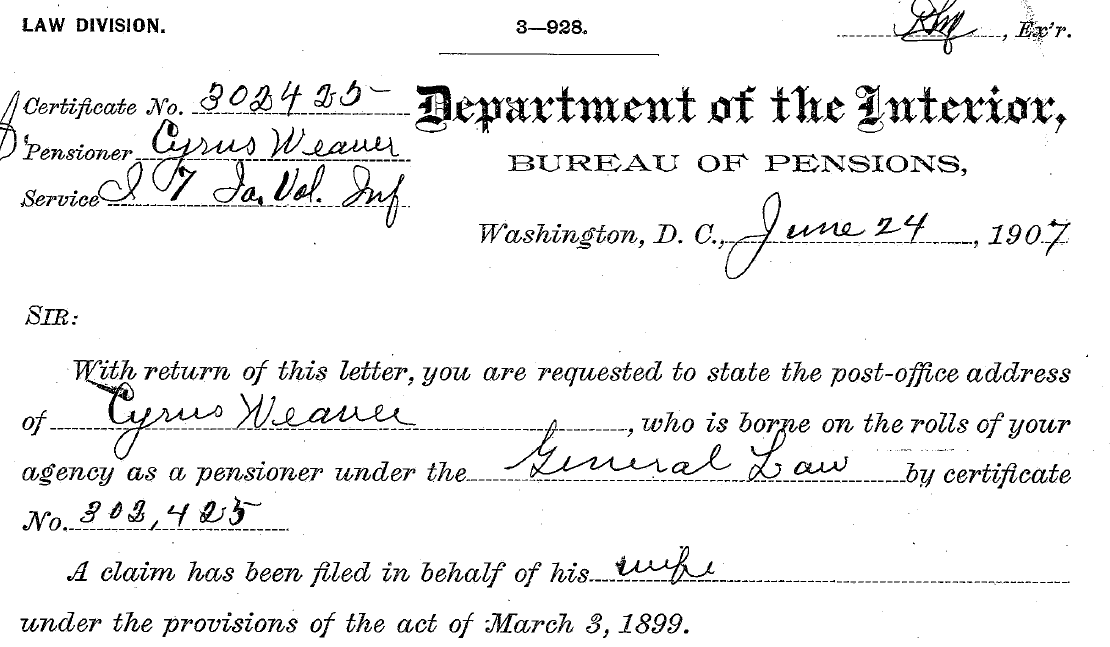
Cyrus Weaver enlisted in Company D of the 7th Iowa Volunteer Infantry on July 24, 1861, just months after Fort Sumter. He was mustered out and re-enlisted, eventually serving with the 28th Iowa Volunteers as well. His service record shows the grinding toll that war took on ordinary men: typhoid, chronic diarrhea, rheumatism, and more. By the time he was honorably discharged on July 31, 1865, the war had wrecked him.
That’s not the interesting part.
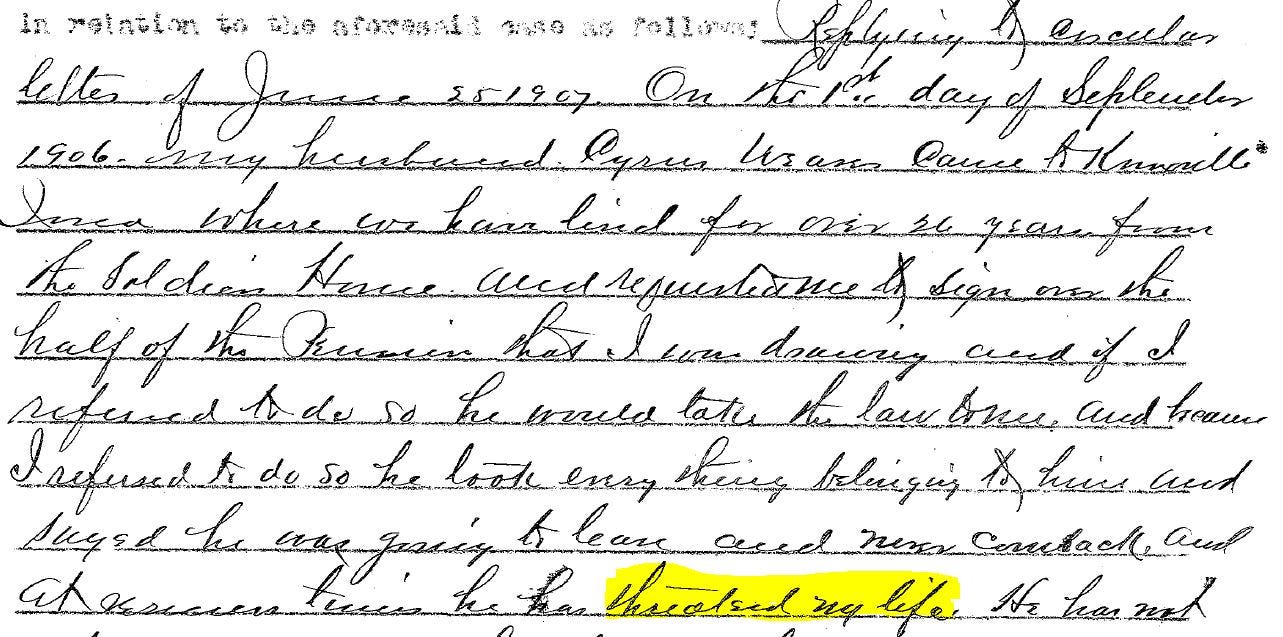
Cyrus filed for a pension, and what followed was a bureaucratic marathon spanning decades. His file swelled to 112 pages—not because his military service was complicated, but because his personal life was. At the center of the file is a protracted battle between Cyrus and his estranged wife over twelve dollars a month.
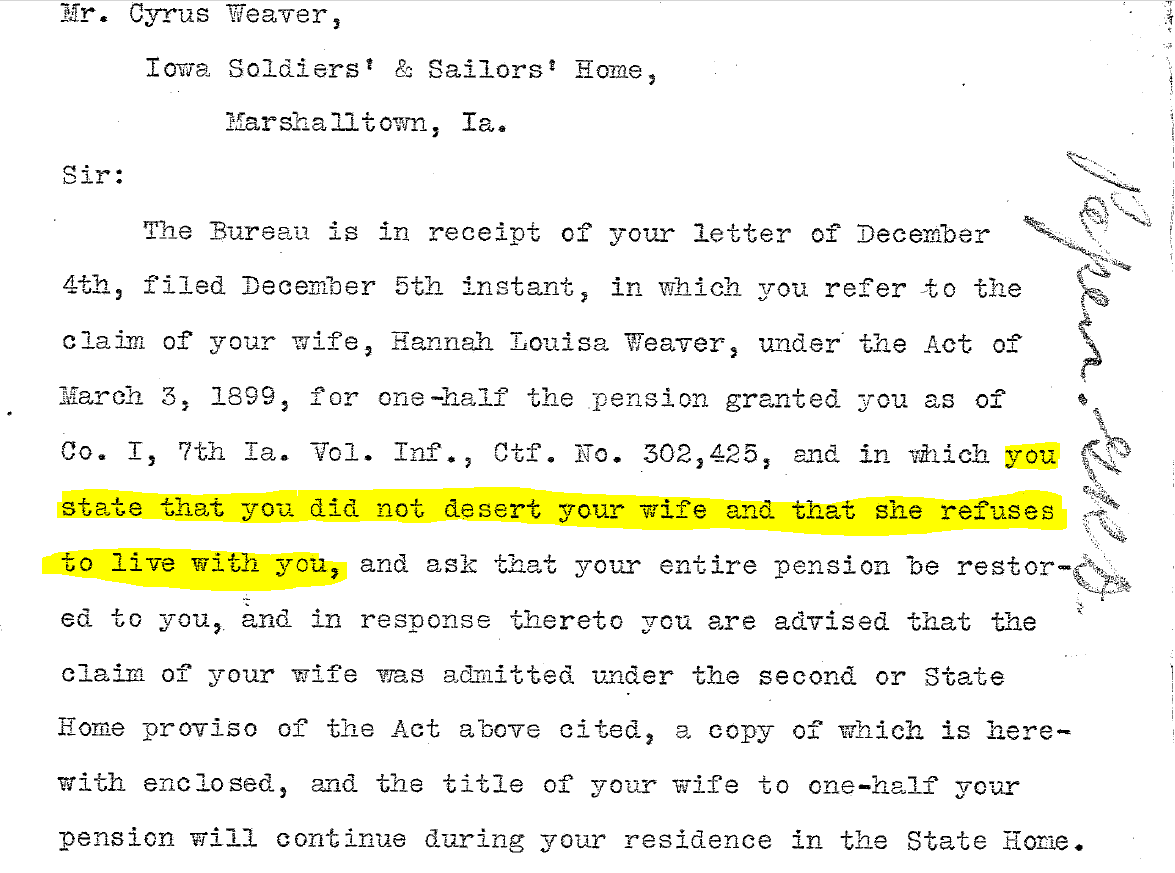
Twelve dollars. That’s what Cyrus received from the government for his shattered health. His estranged wife wanted a piece of it. What follows in the file is a remarkable paper trail of claim and counter-claim, sworn depositions, examiner’s reports, and bureaucratic rulings that reads more like a divorce proceeding than a military record. You can trace the arc of a marriage falling apart through government forms—the accusations, the denials, the neighbors dragged in to testify about who was living where and with whom and whether the veteran was really as disabled as he claimed.
The medical examiners contributed their own chapters to the drama. Over the years, Cyrus’s listed ailments grew like a Victorian medical encyclopedia: rheumatism, nervous debility, chronic diarrhea, asthma, lumbago, heart disease, disease of the nervous system, impaired sight, and failing hearing. His application was submitted, rejected, resubmitted, approved for one condition, denied for another, increased, decreased, and reconsidered so many times that the file reads like a bureaucracy arguing with itself.
One poignant detail: a note on his later paperwork reads, “Claimant does not write.” By the time Cyrus was admitted to the Iowa Soldiers’ Home in Marshalltown—a facility for disabled and destitute veterans—he was 64 years old, his occupation listed simply as “miner.” His pension was $12 a month. His disability was listed as “Rheum.” He was honorably discharged from the Soldiers’ Home after a stay, with the notation: “No objection to his readmission is known to exist.”
The government let him come back. One suspects his wife did not.
What the File Taught Me: Weaver’s file is proof that pension records aren’t just about the war. They’re about the aftermath—the decades of fallout that no battlefield monument commemorates. If you’re looking for the texture of an ancestor’s daily life, this is where you find it.
The Trifecta: What Three Files Teach Us
I didn’t set out to create a comparison when I ordered these files over the years. I was chasing individual stories. But laid side by side, the three files demonstrate something important about pension records as a research tool: you never know which version you’re going to get.
Fat Jack’s file was about his age and medical conditions — important information for the backstory of a larger-than-life character. Joel McPherson’s Confederate application was pure testimony—sworn accounts from fellow soldiers that transformed a box of artifacts into evidence of heroism. And Cyrus Weaver’s massive Union file was a domestic epic—112 pages of human drama played out through government paperwork.
Each file answered questions I didn’t know I had. Each one made a story richer. And each one cost me $25 (ten years ago) and a few months of mailbox stalking.
Here’s what I want you to take from this: if you have a Civil War ancestor—Union or Confederate, famous or forgotten—there is almost certainly a pension file waiting for you. It might be ten pages. It might be a hundred. It might tell you about a battle your great-great-grandfather never talked about. It might tell you about a toxic marriage nobody mentioned. It might explain the meaning of an old photograph that’s been sitting in a drawer for a century.
Or it might just confirm what you already suspected: that twelve dollars a month wasn’t nearly enough.
Your Assignment: How to Get Started
If this post has convinced you to order a pension file—and if it hasn’t, I admire your resistance to peer pressure—here’s what to do:
First, identify your Civil War ancestor. Start with family trees on Ancestry or FamilySearch. Look for men born between roughly 1820 and 1848. Census records from 1870, 1880, and 1890 (what survived of it) sometimes note veteran status.
Second, find their regiment. The National Park Service’s Civil War Soldiers and Sailors System (nps.gov/civilwar) is a free database. Fold3 (fold3.com) has indexed service records and some pension documents. You need a name, a state, and ideally a regiment to place your order.
Third, submit your request. For Union files, go to the National Archives website (archives.gov) or third party vendors and order a copy of the pension file. For Confederate files, contact the state archives of the state where your ancestor lived after the war. Many Southern state archives have online request forms.
Fourth, wait. This is the hardest part. Channel your inner Cyrus Weaver and prepare for a bureaucratic process that, like his pension claim, may involve multiple submissions, unexplained delays, and a vague sense that someone in Washington is arguing about your request in a windowless room. But when the envelope arrives—hopefully thick and heavy, from the National Archives—you’ll understand why I keep ordering them.
Parting Shot
I’ve spent years telling stories from the dustbin. Murray and his friends. Uncle Richard. The ghost hunters. But this post is different—it’s less about my stories and more about yours. Somewhere in your family tree, there is almost certainly a veteran whose pension file is sitting in a box in Washington or a state archive, waiting for someone to ask for it.
A drummer boy from Maine. A cavalryman from Tennessee. A broken miner from Iowa fighting with his wife over twelve dollars. These aren’t the stories that make it into the history books. But they’re the stories that make your family history feel real.
Go order one. Then comment on what you found.
You never know what you’ll find in the dustbin.
P.S. Next time we return to Murray’s world. I’ve been sitting on a story about a sterling silver trophy, and a connection I didn’t see coming—even though the evidence was sitting on my bookshelf for years. After that, I need to explain why Helen held on to Joel’s Confederate artifacts for nearly seventy years. Stay tuned.